Monday, May 18, 2015

A trip to Paris

"When spring comes to Paris the humblest mortal alive must feel that he dwells in paradise."

--Henry Miller, Tropic of Cancer

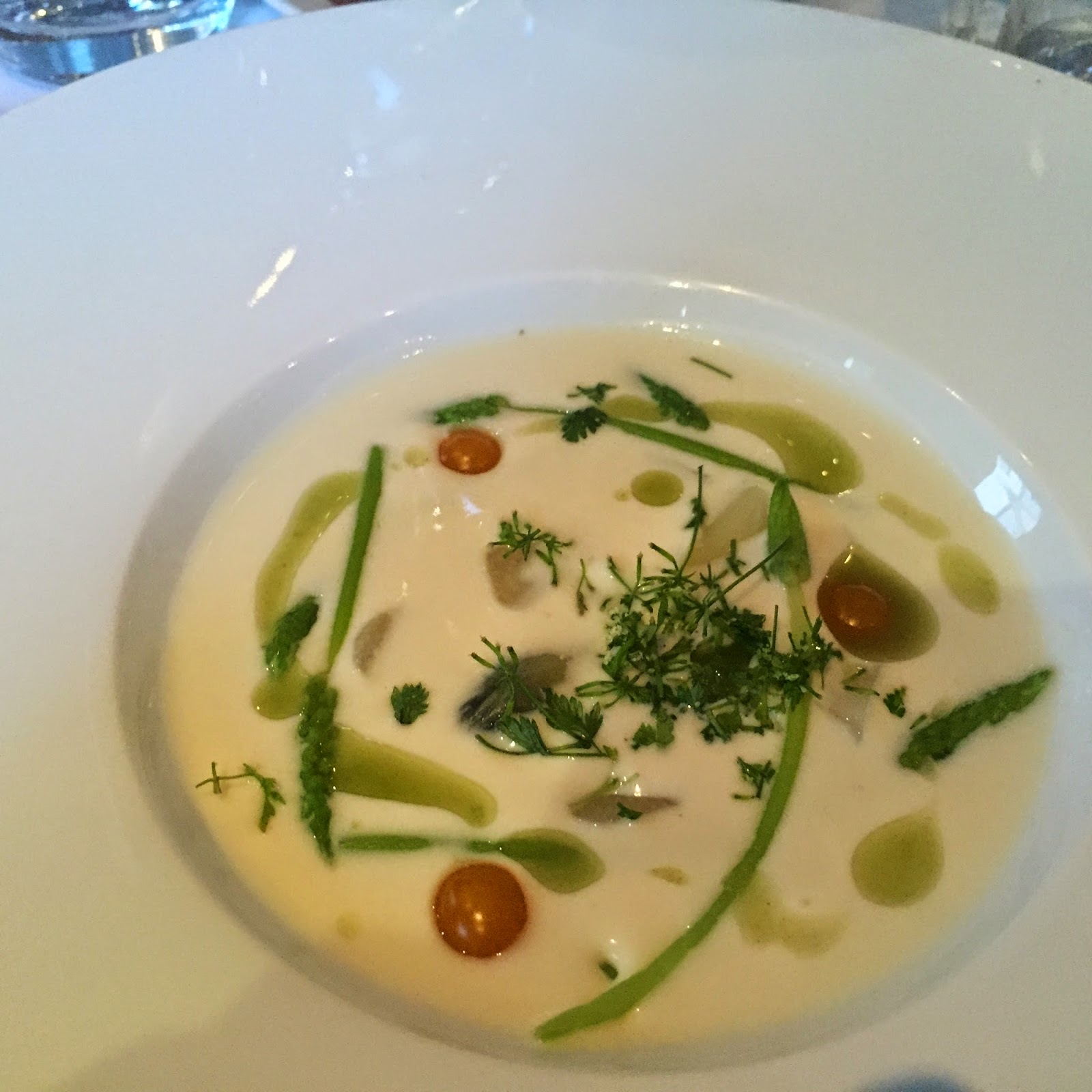
I had the amazing privilege to go travel (alone!) to Paris earlier this month. My first time. It was such a treat to finally be in this city, where I could see Art at every turn, eat heavenly food, nap every day (you know that detail had to be in the list), drink wine with lunch, wander alone, shop for unmentionables, meet amazing new friends, and really notice the tiniest details. I felt twenty again (in only the best ways).

To make the trip even sweeter, when I got back, Soren greeted me with long stares and smiles, as if he couldn't believe that I was really home.

All of this made the trip a gift that I will never forget. 


Monday, April 13, 2015

Why I don't wish that Soren would speak


Some friends and relatives are confused when I say I don't wish that Soren would speak. I have to check myself that I'm not coping by denying my feelings on this issue, but no, I feel at peace with his not speaking.

I do, however, hope that he develops a robust way to communicate.

That distinction has been on my mind lately. I've used the words wish and hope with purpose here, because those two words can convey a lot about my reasoning when it comes to Soren's communication.

To wish is to want something different from reality. Wished-for things are often impossible, or at least unlikely. They indicate something that's not the way things are. I wish I could play the drums. I wish I could be a tennis ace. I wish I had paid more attention in college. (Those statements are all true, by the way.) But they express situations that can't happen, either because they are in the past or because, knowing my skills, they will never happen. (Wishing requires me to remember those lectures about the subjunctive mood--the ones in college that apparently I slept through.)

But hope--hope is something I can get behind. Hope is a positive. It's about the future, and it indicates something I intend to do, if it's at all possible. It's something that could happen if I get all my ducks in a row.

And that's where Soren's language comes in. Perhaps I do wish he hadn't stopped talking, especially on my bad days. But that's a futile exercise. That's the past, it's unclear why it occurred, and no one knows how to bring that language back. But I do hope that Soren expands his communication skills on the iPad. And hoping for that makes me feel optimistic, not sad.

And I think that's why distinguishing wishing and hoping is revealing to me. To wish that Soren would still speak is a selfish one. It's about me, my grief, my ease of moving through life with him, my clinging to the past. But a hope that he progresses in communication is about him. I want him to be able to tell people what he wants, but also what he thinks and how he feels. And this may just be possible, with the right supports (and technology).

I want Soren to be able to tell us when he's mad. I want him to type, to e-mail, if ever so simply. For his sake. This may take ten, twenty years, but I do still think it's possible.

I hope that Soren develops communication that serves his needs (and whims), not just communication that makes the lives of others easier. Soren is a typical seven-year-old in so many ways; I'm pretty sure that being able to say "I'm pissed at you, Mom" would be liberating for him. It would mean he doesn't have to bite his hand bloody when he is frustrated with my demands. Other kids get to say "I hate you, Mom." They are probably punished for saying so, but still, their lips can form those words. I haven't added hate to Soren's iPad vocabulary. Maybe I should. I'm sure I said those words at seven (and got a swift timeout, too).

I dearly hope that some day Soren will form highly inappropriate sentences on his iPad. If--no, when--that happens, don't be surprised that I'm smiling.

Monday, April 6, 2015

Mend my life


This has been a tough week. I got news that a big life change that I was hoping for isn't going to happen. I feel like I'm flailing, trying to get a grip on what my future will look like without this dream. I don't know what to do next or how to fill the hole that the dream had occupied. (Oh my, that sounded particularly melodramatic. It's kind of my theme this week.)

By chance, this poem appeared in some newsfeed or timeline of mine this week. I had read this poem before, but it seems to be especially relevant this week. I can't stop reading it.

The Journey
by Mary Oliver

One day you finally knew
what you had to do, and began,
though the voices around you
kept shouting
their bad advice—
though the whole house
began to tremble
and you felt the old tug
at your ankles.
"Mend my life!"
each voice cried.
But you didn't stop.
You knew what you had to do,
though the wind pried
with its stiff fingers
at the very foundations,
though their melancholy
was terrible.
It was already late
enough, and a wild night,
and the road full of fallen
branches and stones.
But little by little,
as you left their voices behind,
the stars began to burn
through the sheets of clouds,
and there was a new voice
which you slowly
recognized as your own,
that kept you company
as you strode deeper and deeper
into the world
determined to do
the only thing you could do—
determined to save
the only life you could save.

Thursday, November 13, 2014

My Greenlake in November


At no other time (than autumn) does the earth let itself be inhaled in one smell, the ripe earth; in a smell that is in no way inferior to the smell of the sea, bitter where it borders on taste, and more honeysweet where you feel it touching the first sounds. Containing depth within itself, darkness, something of the grave almost and yet again wind; tar and turpentine and Ceylon tea. Serious and lowly like the smell of a begging monk and yet again hearty and resinous like precious incense.

― Rainer Maria Rilke, Letters on Cézanne


Monday, November 3, 2014

pumpkin


We've had a full month: a pumpkin patch field trip, chest colds, school IEP meetings, lots of work travel for Erik, baseball, a halloween zebra, and the return of Seattle rain. I love this time between when school starts and when the holiday madness begins. 


Monday, October 20, 2014

His privileged life

Here was my pre-kid parenting fantasy number 124: Erik and I would pull our elementary-aged children out of school for a year and take a work sabbatical to travel the world, simply and mindfully, to show the kids what's what in the grand scheme of things and how privileged they are. The year would be pivotal, especially to the kids, whose views of others would be profoundly changed and softened.

Okay, that trip will probably never happen. Setting aside the logistical nightmare that it would be with a special-needs kid, there's the big issue that I don't think that my fantasized perspective shift would sink in for Soren intellectually. But I'm well past the stage in which I feel like Soren's life is a tragedy because I don't "get" to do the parenting bucket lists items that I had dreamed about. This life is our Normal, and sometimes I forget that it's so different from everyone else's normal. And you know what? It's a life full of privilege, even, and especially, for Soren.

Yes, he has profound autism, anxiety, a sleep disorder (now on hiatus!), some funky GI things, and behavior challenges. But not a day goes by that I don't remember that he has so much that makes his life and our lives with him just so easy. We don't need an (elitist and expensive?) trip around the world to understand this. It's ridiculous just how much he was just born into (and we his parents were born into). We've done nothing to deserve this. He's done nothing to deserve this. But he is privileged. And his autism just magnifies this privilege. He is:

  • White. African-American children tend to be diagnosed years later or are often misdiagnosed.
  • Male. If he were a girl with autism, he probably would have been diagnosed even later, since providers know more about males with autism and therefore tend to look for those male-specific symptoms.
  • In a financially comfortable family. We can afford treatments that aren't covered by insurance. For example, Soren's language therapy--using an iPad to communicate, which is a critical skill--doesn't get compensated by our popular insurance plan because he's "aged out" of that benefit (at seven!). 
  • North American. Most research on autism is focused on more affluent western or Asian countries. Treatment is often scarce in developing countries, and there may be a more prevalent public stigma about the disorder.
  • In a stable home life. He's not homeless, a victim of abuse, or impacted by substance abuse. He lives with two present parents. We are all physically healthy.
  • Supported fully by an understanding family and community. He has an extended family that gets it, and a community that (generally, at least) doesn't blame him or us for difference.
  • Living in an urban setting. We have ready access to evidence-based autism resources. We don't have to drive an hour for therapy.

Yes, autism can be challenging for us, and for him. But I've seen what happens when you don't have this privilege that we have, and disability can be so much more impacting and even devastating. I've seen a single mom with cancer struggle to keep up with her autistic kids. I've seen parents with what is probably untreated mental illness try to manage complex behavioral outbursts and feeding disorders in their autistic kids. I've seen a little boy ceded to a state group home because his parents just couldn't handle his profound autism. I've seen so, so many kids who don't get private speech and occupational therapy, let alone enriching summer programs--kids who could really flourish if they had a little extra support. There is simply no money.

We are lucky, and I am increasingly disturbed by this privilege. This parenting journey is hard enough with all that we have. I grieve for the families whose lives are so much more difficult, through no fault of their own. I am furious at medical and educational systems that don't take care of our most vulnerable people. 

If Soren were typical, I wonder what kinds of conversations I would have had with him about his privilege. In my fantasy parenthood scripts, I imagine that I'd regularly tell him and show him how his privilege is completely unearned. We'd have dinner conversations about what his obligation is to his community because of that privilege and the damage it has exacted. There would be weighty decisions about what school we'd choose to make sure he operates fully aware of the diversity in his own city. And then there's that trip around the world. 

But none of this happens. Our conversation about privilege can't happen with Soren.

At least I don't think it can. Maybe, though, Soren is getting a message about how to treat people. About how being an Other feels. About never, ever making assumptions about a person's abilities or thoughts or feelings. Assuming best intentions. Seeing someone as an individual, not as a representative of a community.

I wish I could explain to him more about his fortunate and unearned place in this world. But maybe he already knows so much more than I do about privilege, expectations, and being an outsider. I continue to be humbled by how much this child teaches me about my assumptions.

Friday, August 29, 2014

Comparing

A child of one of my friends plays chess. He's seven.

Soren's cousin paddleboards. At seven. Another cousin learned to ride a bike at two.

At seven, Soren is making progress in putting on his socks. He can almost trace the letter S. He's sitting at the table to eat. And I am so proud of him.

What's interesting to me about knowing these tidbits about others is that I feel absolutely no resentment or jealously. These are just facts about other kids. For some surprising reason, I don't immediately jump to comparing and contrasting other kids with Soren.

Is this equanimity just growth as a special needs parent? Have I just moved along in the journey, well past grief and then comparison, to a sort of peaceful mindfulness? Perhaps. But what strikes me is that I can be this non-judgmental about Soren when this lack of comparison is so foreign to me.

As long as I can remember, I have judged myself and oriented myself in comparison to other people. Other people helped me know where I stood in the world, and whether to be proud (college grades) or ashamed (high school PE) of myself. My self-image is totally wrapped up in comparison. How far off the norm am I? Once I find out, I know how to think of myself.

I got good grades in high school and college. But it wasn't because I had sparks of understanding or creativity. It was because I figured out what the other students were doing for their term paper, for example, and I did just one notch better. I knew how to do that paper only by comparison. There was no passion about the subjects, just a sort of formula to do well. Is it any wonder that I remember very little about my college classes, even in my major?

But with Soren, I compare him only with where he's been. There is no timetable. There are no typical developmental milestones. I've thrown these out, along with the brand-new but outgrown underwear that Soren is just not ready to use.

And what fun it is to have pure joy and pride in something Soren can do. It's just about him, not about how he stacks up. He can put on his pants now! He ate a bite of chicken! He went to school without crying!

Man, I wish I could experience this independent view of myself the way I view Soren. Could I give a speech, write a blog post, dress for a party without comparison? And what if this freedom allowed me to make grander life plans that I'm so hesitant to make because I don't have models of such activities?

I'd love your feedback about this comparison issue. And I'm going to really work on not molding my thoughts in response to yours.


Give Me a Nap | Template By Rockaboo Designs | 2012